Skin cancer is an abnormal development of skin cells. Skin cancer can form on the skin due to too much exposure to ultraviolet (UV) rays from the sun, tanning beds, and lamps. It appears in the form of bumps or lesions, and its exact appearance depends on the type of skin cancer.
What Is Skin Cancer?
The most common types are basal cell carcinoma, squamous cell carcinoma, and melanoma.
Basal Cell Carcinoma (BCC): The most common type, BCCs first affect the basal cells in the superficial skin layer. This type of skin cancer typically does not metastasize. When it grows, it can reach deeper in the skin layers and can affect other types of tissue like bones. In terms of appearance, BCCs may look flesh-colored and round, can sometimes be shiny, and may bleed or develop a scab.
Squamous Cell Carcinoma (SCC): Also quite common, SCCs first affect the squamous cells (thin and flat) in the superficial skin layer. They are much more likely to metastasize than BCCs. Squamous cell carcinomas look like sores, red bumps, or flat lesions, and they sometimes have a scaly appearance.
Melanoma: Melanoma is the most aggressive variety of skin cancer and can be fatal. It first affects the melanocytes (pigment-creating cells) in the skin. In terms of its appearance, melanoma often experiences changes in size, color, or texture. It may bleed, itch, or burn. It can appear as a large mole, can be asymmetrical, and can have irregular borders.
Skin cancer can be hereditary. When a person is lacking in melanin, their skin is less protected against the effects of UV rays, meaning they have a higher risk of developing skin cancer. If you have a lighter natural skin color or have sensitive skin that burns or reddens easily, gets freckles, or easily burns when exposed to the sun, you are likely more prone to developing skin cancer. The biggest risk factor is a first degree relative (parent, sibling, child) who has melanoma.
People with blue or green eyes and blonde or red hair also have a higher chance of getting skin cancer. Additionally, having numerous moles or certain types of moles suggests a higher risk for skin cancer. These genetic factors indicate a person’s sensitivity to UV rays.
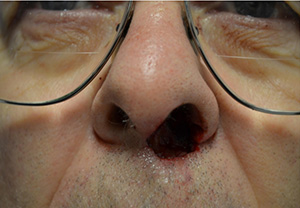
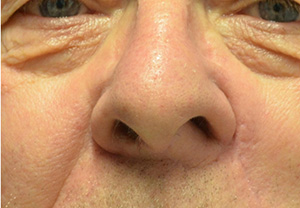
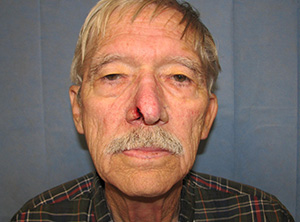
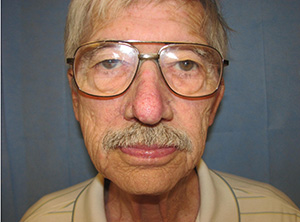
Skin Cancer Reconstruction Before-and-After Photos
How To Identify Skin Cancer
Ohio residents are at a high risk of developing skin cancer. It is critically important to your overall health to know your skin and look out for changes to any spots on your body. This means knowing the ABCDE’s of skin cancer:
A—Asymmetry: If a potentially cancerous lesion is asymmetrical, this may be a warning sign for skin cancer.
B—Borders: If the edges of a lesion are jagged or blurred, this can be an indicator of skin cancer. Additionally, while a rounded shape is not a warning sign, an irregular shape could be.
C—Color: If a lesion experiences color changes, it is important to get it checked out. Lesions with multiple colors (such as pink and brown) can also be cause for a visit to a doctor.
D—Diameter: If a lesion is larger in size than a pencil eraser, it is important to have it professionally evaluated.
E—Elevation or Evolution: Lesions that change from flat to raised or go through other changes in their appearance should be evaluated.
If you, your dermatologist, or your primary care doctor notice a spot on your face that seems to be growing or changing, a larger spot on your body or a family history of skin cancer, ask your physician for a referral to our office. Our board-certified plastic surgeon, Dr. Jason Lichten, will be happy to evaluate it to determine if it is a cause for concern.
“Dr. Lichten did an excellent job. I have really healed well and you can hardly tell I had a cyst removed from such a prominent place on my face. Thank you so much! I would definitely see him again and recommend him.”
How To Avoid Skin Cancer
You can avoid skin cancer by staying in the shade. Wearing a wide-brimmed hat when going out will help to protect exposed skin from UV rays, as will wearing tightly woven fabric (like canvas). Wearing sunglasses will help protect the eye area.
Always use sunscreen. For the best results, use a sunscreen with at least SPF 30. UV rays are the strongest from 10 am to 4 pm, and proper sun protection is vital during this period.
When choosing the right sunscreen for your skin, look for both UVA and UVB protection. UVA, or ultraviolet A, rays have a longer wavelength. UVA is one of the culprits for skin aging. UVB, or ultraviolet B, rays have a shorter wavelength. These rays are more commonly associated with sunburns.
Reapplication of sunscreen is very important. The FDA recommends applying sunscreen every two hours and after going out for a swim or toweling off.
Learn more about sunscreen options on our professional skin care products page.
You need to skip indoor tanning. The change in skin color you get from indoor tanning is a sign of skin injury. Avoiding indoor tanning can also reduce your risk for getting cataracts and cancers of the eye. Tanning beds deliver radiation, which causes DNA damage in the skin that can lead to skin cancer.
Mohs Surgery for Skin Cancer Removal
During the procedure, a layer of visible cancerous tissue will be removed and then examined under a microscope by the Mohs surgeon. If cancer cells are found at the edges of the resection, additional tissue will be removed. The method will be repeated, and additional layers will be removed until no more cancer cells are seen under the microscope and the margins are clear.
Local anesthesia is administered around the area of the skin cancer. This will numb the area to allow the Mohs surgeon to excise the tumor and keep the patient more comfortable.
Post-Mohs Reconstruction Surgery for Skin Cancer Removal Patients
After the lesion has been removed, reconstructive surgery is often necessary to close or cover the treated area and to restore the natural appearance of the skin involved in the cancer excision. Dr. Lichten may perform immediate reconstruction of your skin lesion excision, or you may be referred to or sent from another surgeon who performs the cancer resection.
Post-Mohs skin reconstruction involves numbing with anesthesia and the creation of a skin graft or tissue flap. The right technique for each case is chosen based on its ability to most effectively create a natural appearance for the reconstructed skin.
Will Skin Cancer Removal Cause Scarring?
Dr. Lichten will use special techniques from his plastic surgery training to minimize or hide the scars left from the removal of the lesion. For larger lesions on the body, Dr. Lichten may create a skin flap or use a skin graft to rebuild the surface of the skin and provide the most aesthetically pleasing result for your specific situation.